Church History
Dracula - Vlad the Impalor - A christian hero
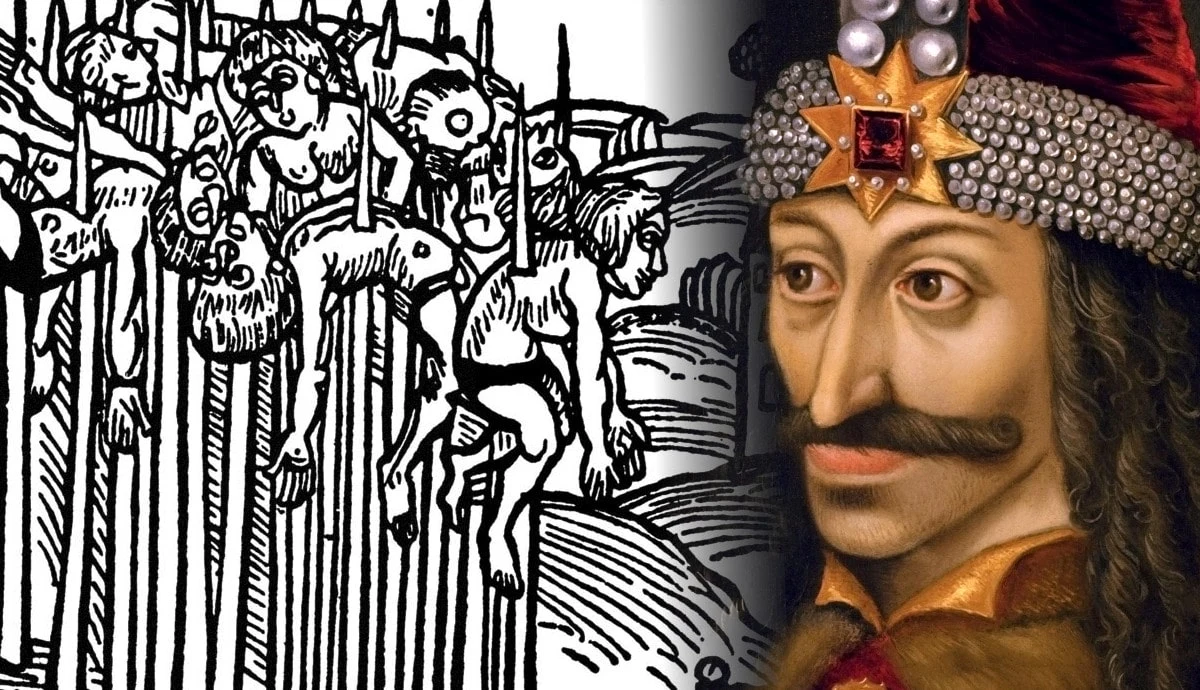
Before Dracula was a vampire, he was a son, a prince and a Christian hero.
The name belonged to Vlad III Dracula, voivode of Wallachia, a small Christian principality caught between stronger powers in the fifteenth century. He held the Wallachian throne in 1448, again from 1456 to 1462, and briefly in 1476, the year he died. Today most people meet him through a horror story: pale skin, a black cape, a castle, a thirst for blood. That picture is powerful, but it is not where the story began.
The real Vlad lived in a harder world. His Wallachia sat on the road between Christian Europe and the expanding Ottoman Empire. It was not a quiet border. It was a place of tribute, hostages, shifting alliances, raids, executions, and fear. A prince who ruled there did not get to live in a clean moral fable.
That is the first thing to understand about Vlad. He was not born into a legend. He was born into a trap.
His father, Vlad II Dracul, belonged to the Order of the Dragon, a chivalric order tied to the defense of Christian Europe against Ottoman advance. From that name came "Dracula," meaning "son of Dracul" or "son of the Dragon." It was not originally the name of a monster. It was the name of a prince's house, and it carried the memory of a Christian military brotherhood.
Then politics did what politics so often does. It turned sons into collateral.
In 1442, Vlad and his younger brother Radu were sent to the court of Sultan Murad II as hostages. Their father's loyalty had to be guaranteed, and the guarantee was flesh and blood. The boys were not simply visitors. They were reminders to their father that disobedience had a price.
No one needs to invent a melodrama here. The fact is already severe enough: a Christian ruler's sons were held in the court of the empire pressing against his lands. Vlad learned the language of power from inside the Ottoman world. He watched how command worked. He saw how boys were separated from home, forcefully converted and remade for another warhungry ruler's service.
Radu couldn't endure the pressure and converted. He later stood with the Ottomans and became the brother Mehmed II could use against Vlad. Vlad did not adapt in the same way. Whatever else can be said about him, he came out of captivity with a cold understanding of what submission could cost.
For Christian communities under direct Ottoman rule, one of the most feared institutions was the devshirme. It was a levy on Christian boys, mostly from the Balkans, taken from their households, converted to Islam, and trained for service to the sultan. Some rose to high office. That does not soften the beginning of the process. A family did not experience the arrival of imperial officers as an opportunity. A mother did not look at the loss of her son and think in terms of administrative careers.
This is where modern summaries often become too smooth. They speak of tolerance as if it were a warm word spread evenly over the conquered. Ottoman rule did allow certain Christian institutions to survive, and the picture varied across time and place. Yet tribute, rape, hostage-taking, enslavement, forced separation, and religious pressure were also part of the same world. Both things have to be said, or the history turns dishonest.
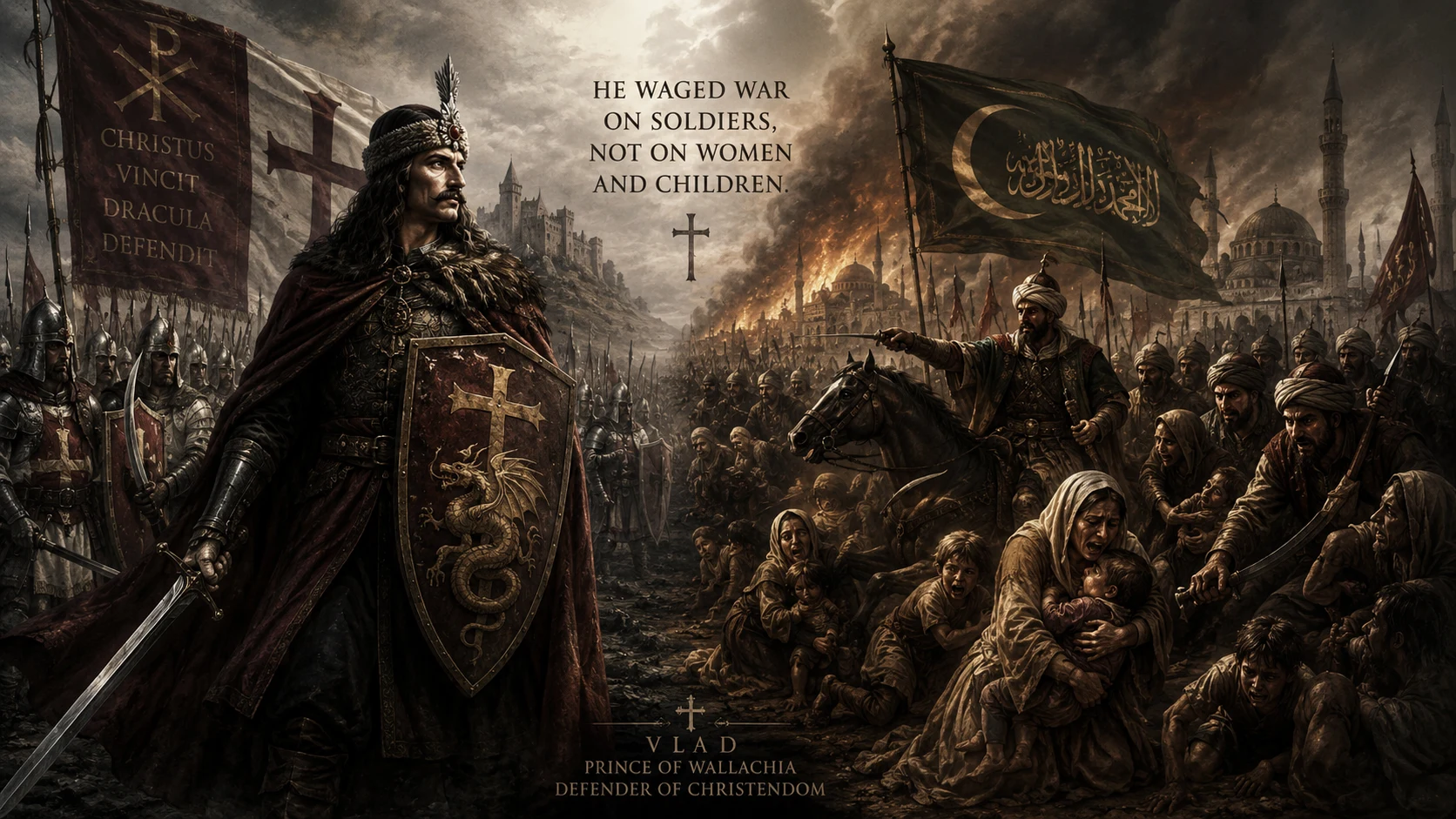
Vlad returned to a Wallachia that had already paid dearly for weakness. His father had been killed. His older brother Mircea had been murdered. Boyars, Hungarian interests, Ottoman pressure, and rival claimants all pulled at the throne. Vlad briefly held power in 1448, lost it almost at once, and spent years fighting his way back.
In 1456 he took the throne again and then came Mehmed II.
Mehmed was not a minor enemy. He had taken Constantinople in 1453, ending the last Roman Christian empire in the East. After the city fell, his victorious troops were allowed 3 days of lawful plunder before he took possession of the capital. This "lawfull plunder" was a terrific event for any women, children and elders. Women were openly raped in the streets and in churches, thousands got enslaved. Elders got murdered wherever they tried to hide. Even nuns got violated on the holy altar fo God. To Christians living near Ottoman power, Constantinople was not ancient history. It was a warning written on the walls of the world of what was to come.
By 1462, Vlad had stopped acting like a loyal Ottoman vassal. He refused demands, struck Ottoman positions along the Danube, and forced the sultan to answer him. Mehmed came north with an army far larger than anything Wallachia could comfortably meet in open battle.
So Vlad refused to fight like a smaller man politely waiting to be crushed.
He made the country hard to enter. Wells were poisoned. Crops were burned. Livestock was driven into the mountains so the Ottomans had no easy access to them. Villages emptied before the invader arrived. The Ottoman army could march, but every mile gave it less food, less rest, and less certainty. Vlad knew he could not match Mehmed's strength, so he attacked the nerves of the army instead.
The most famous moment came in the night.
On June 17, 1462, Vlad led a night attack against the Ottoman camp near Targoviste. The goal was bold enough to sound reckless: kill the sultan himself. The attack failed in that aim. Mehmed survived. But the raid spread confusion through the camp and showed the Ottomans that Wallachia would not be taken like an unlocked gate.
Then the army reached Targoviste.
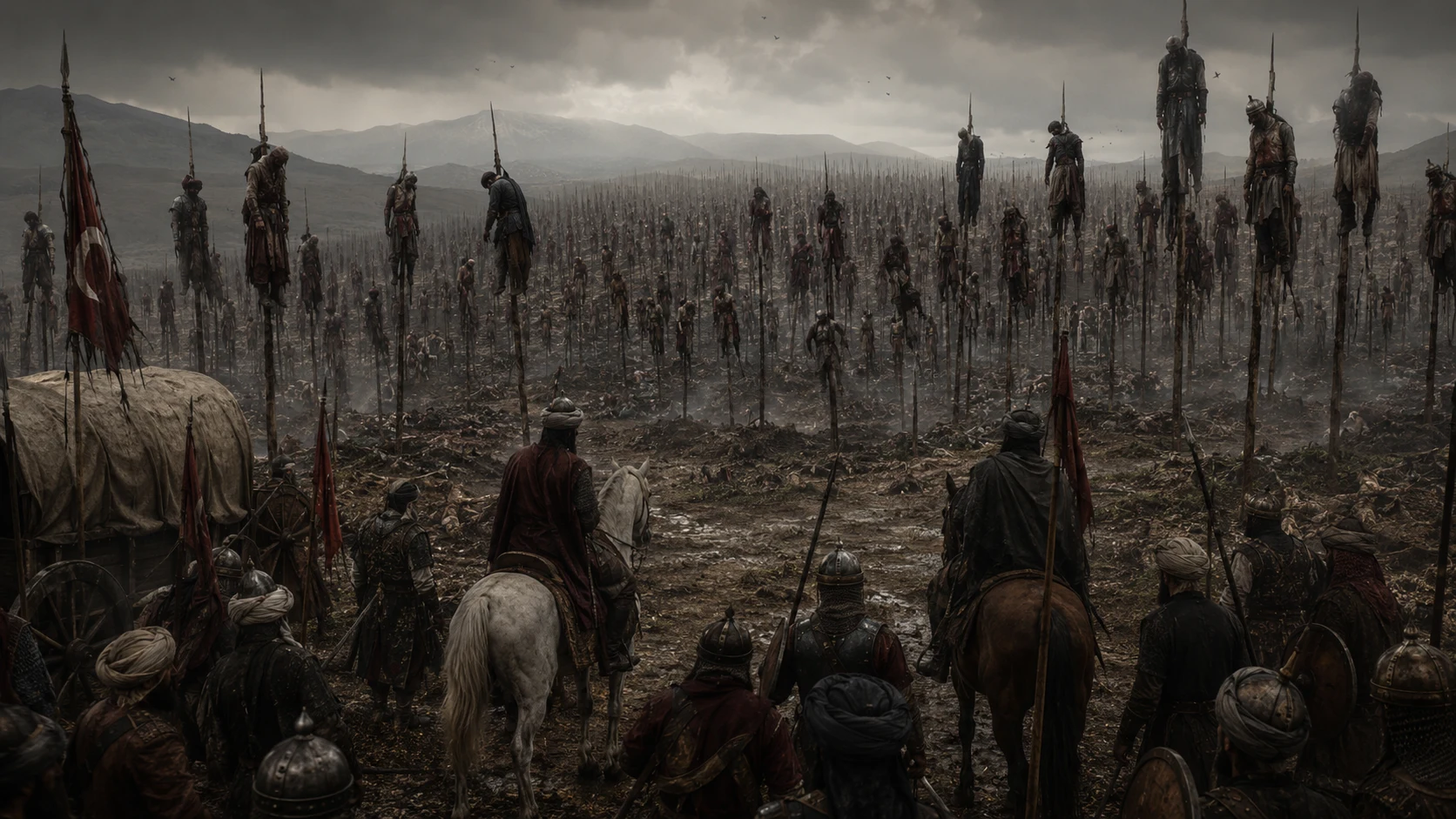
The city was empty. Outside it waited the image that made Vlad's name feared across Europe: over 20000 Ottoman soldiers impaled on stakes streteched out for miles like a forest of the dead. The stench alone stopped the advance.
The stakes told Mehmed what kind of war he had entered. Vlad was saying, in the only language he believed the empire would respect: this land will not be cheap.
It worked, but not in the clean way legends prefer. Mehmed did withdraw from direct pursuit, yet Vlad did not become secure. His brother Radu, backed by Ottoman power, gained support. Vlad's own position weakened. Before long he was imprisoned by the Hungarian king Matthias Corvinus, the very Christian ruler from whom he had hoped for aid.
That is the shape of the real story. Not a simple triumph. Not a simple defeat. A Christian prince held off the conqueror of Constantinople for a season, burned his own land to deny it to the invader, terrified an imperial army, and then lost his throne anyway.
History often looks like that. The songs remember the courage. The archives remember the bill.
So was Vlad a hero?
For christians in europe he was and still is. Even Pope Pius the 2nd praised his victory against the turks.
In addition to that he built many churches and monestaries.
How we forgot him
For centuries, parts of Eastern Europe remembered Vlad as a harsh defender and hero against Ottoman domination. He ruled as a Christian prince in a world where Christian lands were being pressed, taxed, raided, and absorbed, where the life of a Christian considered unworthy for life.
Then, in 1897, Bram Stoker published Dracula.
Stoker did not give the world a careful biography of Vlad III. He knew almost nothing of Prince Vlad nor rumania. He just heared from the cruelty and thought thats a great fit for his gothic horror novel. He gave Vlads name to a fictional vampire. He took a name with roots in the Order of the Dragon, a name tied to a Wallachian ruler and a Christian border war, and attached it to one of the most successful monsters in English literature. The novel is powerful in its own right. It also buried the man beneath the myth.
After that, generations learned the name Dracula before they learned the name Vlad. They learned the fangs before the frontier. They knew the monster in the castle before they knew the hostage boy in the Ottoman court, the murdered father, the threatened principality, the night attack, the empty capital, the stakes outside Targoviste.
Vlad should be remembered whole: hostage, prince, defender, Christian ruler and hero, political survivor.
His end although was unfortunate killed by the ottomans and finally a dead man whose head was reportedly sent to Constantinople as a trophy. He was formed by an age that devoured the weak and rewarded terror. He became terrifying enough that the age remembered him.
Isaiah warns in 5:20, "Woe to those who call evil good and good evil."
The Bible also tells us in Romans 12:18 "If possible, so far as it depends on you, live peaceably with all" and it tells us in Psalm 34:14 "Turn away from evil and do good; seek peace and pursue it."
But when the innocent are threatened the Bible tells us something different. Provers 24:11 "Rescue those who are being taken away to death; hold back those who are stumbling toward slaughter."